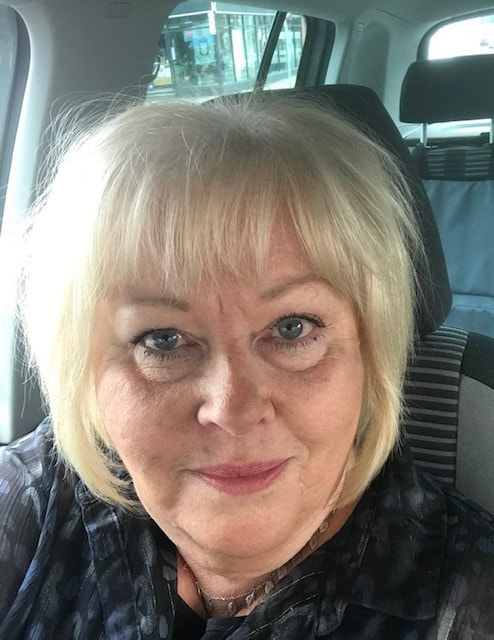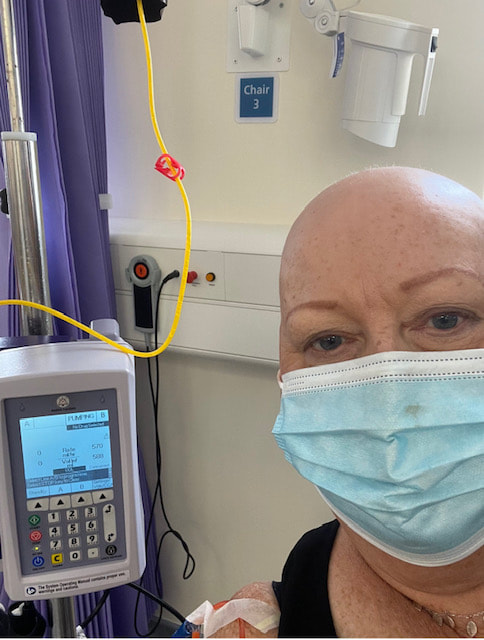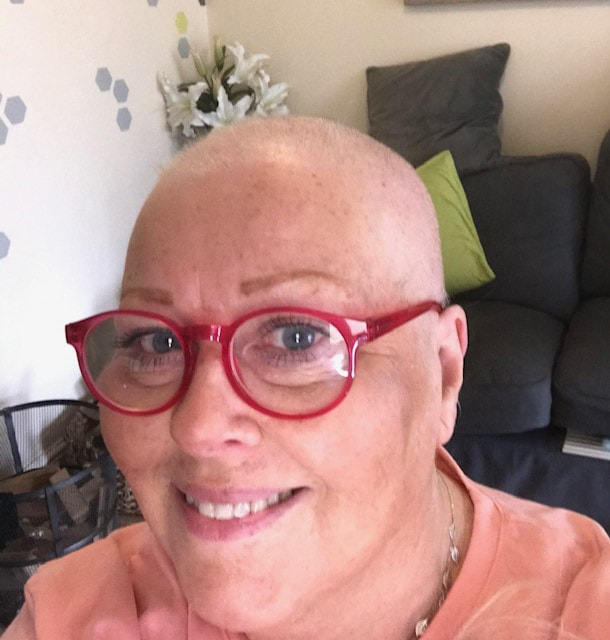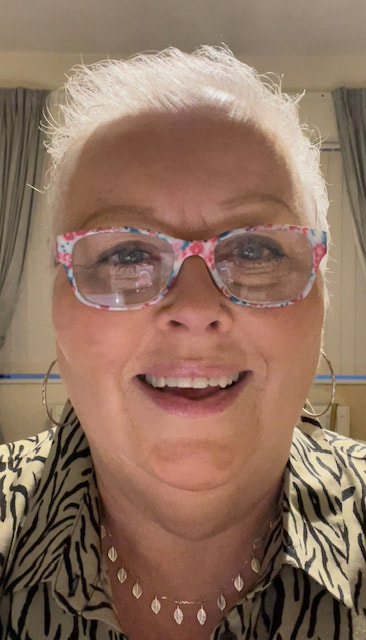
How wrong I was…
The back story
At a routine examination in 2021, I was diagnosed with complex endometrial hyperplasia, which is a pre-cancerous change in the cells in the lining of the uterus. This was a shock to me as I hadn’t had any symptoms that I couldn’t put down to the stress of 2020. The 12 months that followed consisted of endless biopsies, hysteroscopies, and waiting for results. These invasive, humiliating, and excruciating investigations were performed without any anaesthesia or pain management, and I was left with severe medical trauma that I couldn’t seem to get over. I assumed that there was something wrong with me to have been affected so adversely, and as time passed I became quite depressed. I spiralled down towards a kind of ‘rock-bottom’, and soon after I emerged with a strong inner calling to seek physical and emotional support. I began to have weekly therapy sessions (something I had always been curious about but never brave enough for), and at the same time I began working with a personal trainer to help me to process the trauma and build some strength and resilience (this part of the ‘calling’ was a surprise to me as I was a lifelong hater of gyms and exercise). Through implementing these changes, I felt like I had something in my life that I could focus on and have some control over. Within a very short time, the positive impact it began to have on my mental health was noticeable and, frankly, unbelievable.
After almost one year, the biopsies finally turned a corner towards improvement, and I was told in October 2022 that all the barbaric monitoring may soon come to an end.
Wrong again…
The plot twist
In November 2022, at an appointment that I thought was for a discussion with the gynaecologist about further treatment options, I received the shocking diagnosis of endometrial cancer. I don’t think I heard her words properly at first. She said that this result was totally unexpected because the penultimate biopsy had finally shown improvement and I didn’t have any of the typical risk factors. She went on to explain that she had asked for the lab to re-test the sample because she didn’t believe it, but unfortunately it was confirmed. She told me that she had known the diagnosis since the week before but had chosen not to tell me at the end of that week as she didn’t want to ruin my weekend. I thought that was such a strange thing to say at the time, but looking back, the longer you can delay leaving the ‘no cancer’ side of the fence in life, the better. It was obvious that she had been dreading giving me the news, and I remember feeling like I needed to apologise for ruining her weekend and for causing her to have to do the worst part of her job.
I was informed that I was now no longer a gynaecology patient but instead an oncology patient. I couldn’t believe what I was hearing. I was told that there was nothing for me to do and that I would be contacted over the next two weeks to arrange various scans and appointments to decide on the treatment plan. My brain was calm, but my hands began to tremble and a tear rolled down my face. She offered me a tissue and a cup of tea but I politely declined. I thanked her (I am not exactly sure why) and I calmly walked out.
Thrown into the unknown
As anyone who has received a diagnosis of cancer will know too well, the very moment that you have been on the receiving end of those words, something inside you dies. You find yourself abruptly shoved into a bleak and unfamiliar place. You are on the other side of a fence that sets you apart from everyone around you and everything you’ve ever known, and there is nobody there to look after you or to tell you what to expect. I had no idea how I should feel or what I should do. I paced around the London backstreets near the hospital, looking at the buildings, the trees, the carefree tourists, pedestrians going about their business, and people on passing buses. As strange as it sounds, it felt as if I was seeing it all for the first time. In an instant it dawned on me that I had permanently changed. I had cancer and nobody knew. How would I tell my family, my friends, my work? Could I just not tell anyone and maybe it would go away? I suddenly realised that I would never have any children. I oscillated between ‘keep calm and carry on’ and being in tears. I went to visit my sister who lived near the hospital. She gave me tea and cake, and we talked mostly about how on earth we would tell the rest of the family.
It was all such a mess, and I felt guilty for causing it.
Leaving my sister’s flat and catching the tube home was a very strange experience. I was on autopilot for a while, going through the motions of being ‘a normal person’ on the tube, but when I was one stop away from home I suddenly
felt the urge to get off and drop in on a close friend who worked in a shop. I wanted to put off getting home, closing the door, and being alone with what had just happened. I needed one more cry and hug with someone first.
By evening, I had received a lot of messages from friends asking how my appointment had gone. They, like me, thought that it was a routine discussion about further treatment. I actively avoided replying to these messages for as long as I could. I didn’t want to upset anyone. I spoke to my parents, and I remember being very vague about what exactly was going on. I couldn’t tell them that I had cancer; I just strongly hinted at it and hoped that they would understand what I meant without me having to say it. I wanted to protect them from the horror for a little bit longer. I somehow managed to sleep that night, probably because every level of my being was so overwhelmed that it just shut down to escape from reality.
I got up and went to work the next day, mostly so that I could be around friends. I was totally confused about how to get ready for work now that I had cancer. Should I dress differently? Should I wear makeup or leave it off? It took me so long to get myself sorted and out of the house that I ended up being late for work, and I was annoyed at myself because I was always on time. I didn’t see any patients that day, I just sat next to our receptionist all day, grateful not to be alone.
Preparing for battle
I had a gap of five weeks between diagnosis and surgery. During this time, I chose to work as much as I could if I felt up to it. Now and then I would need a day off to recover from scans or to get my head around the surgical plan that was going to cause me to be infertile and in instant menopause. While at work, I would be examining a patient or walking around the hospital, and whenever I randomly experienced a cramp I would be consumed by the grief of what the pain actually meant. It wasn’t just a cramp anymore: it was what uterus cancer felt like. I am not sure how, but I would somehow manage to regulate myself and just continue with whatever I was doing.
The strength training routine that I had built during the months leading up to my diagnosis now became my lifeline. My personal trainer decided that our goal was ‘preparing me for battle’, and we pushed harder than I ever imagined. Exercise became my focus, my distraction, a vital outlet for my sky-high stress levels, and a means of physically preparing myself for both surgery and the inevitable sudden onset of surgically induced menopause. I trained with intense focus and determination in the middle of the whirlwind of scans and investigations. While this was all unfolding, I opened an Instagram account dedicated to documenting my journey of training with cancer, in real time, which was a valuable tool to help me to process everything that was happening. I had never had a public account before, and was not at all comfortable about being public about this terrifying, unfolding story about a very personal form of cancer, but I intuitively felt to go with it. To my surprise, I started to receive comments and messages from women who had also just been diagnosed, offering encouragement and asking for advice, and I made some wonderful and supportive connections in the process.
The real battle begins
I underwent a total hysterectomy and bilateral oophorectomy in December 2022. The surgery itself was relatively uncomplicated, which the surgeon said was largely down to the level of cardiovascular and physical fitness I had been working so hard on that had enabled me to process the general anaesthetic so well. She also said she had noticed my abs during the surgery and was very impressed (unfortunately she then had to make numerous incisions through them so they were no more…).
I was relieved that my immediate recovery was smoother than I had feared; however, the post-operative support for managing surgical menopause was totally absent. On discharge from hospital just two days post-op, I asked one of the nurses what I should expect regarding the surgical menopause. I was met with a blank expression and was told that I should let whoever is looking after me know that if I am tearful or angry then it’s normal. I was gobsmacked. At that moment I realised that I would have to find the answers on my own.
I had numerous surgical incisions, the largest one being slightly smaller than a caesarian scar. I couldn’t bring myself to look at it let alone touch it. I found it totally revolting and my only way to cope was to give it absolutely no attention at all. Needless to say, I was not doing any form of wound massage to reduce the long-term scarring (I didn’t even know that this was a thing until many weeks later —another gap in the post-op care instructions…).
I remember not feeling any emotions for the first week after surgery (and being quite suspicious about it), but then the surgical menopause flooded in:insomnia, grief, anger, anxiety, tears, self-loathing, heart irregularities, palpitations, extreme temperature fluctuations ranging from shivering to burning up, a feeling that my bones were vibrating, tinnitus, extremely heightened sensory sensitivity, dry skin, dry eyes, cognitive difficulties, and even a stammer. Depression quickly set in, making everyday tasks, such as feeding myself, enormously difficult. Living alone made the experience particularly isolating, and in hindsight, potentially dangerous. I somehow muddled through, motivated by the hope of one day returning to the gym sessions that I had grown to love, although I feared that I might never be up to that level of activity ever again.
The downward spiral
After three months of rapid deterioration of menopause symptoms and struggling to advocate for myself with my medical team, I was finally booked an appointment at the hospital menopause clinic. I was prescribed a low dose of oestrogen and testosterone replacement. I had a theoretical risk of cancer recurrence with the medication, but we agreed that the benefits outweighed the small risk. Desperate to try anything, I agreed to give it a go. I was told it might take several months to stabilise, so I tried my best to get back to some kind of life in the meantime.
I returned to my demanding, full-time clinical role in a London teaching hospital at just four months post-surgery. Looking back, this was far too soon to get back to a patient-facing role, but I was desperate to see if I could be ‘normal’ again, and being alone all the time was taking its toll. On returning to work, it soon became evident that I could no longer function in the same way as I did ‘pre-cancer’. I was hormone deficient, traumatised, shocked, confused, grieving, and felt like the brain I was trying to use wasn’t mine. I tried my best to muddle through and carry on; however, life became more intense after around two months back at work (six months post-surgery). I began to experience intrusive and traumatic flashbacks to the cancer diagnosis and surgery, which made working in a hospital environment near impossible. Huge amounts of grief would be triggered within me whenever I encountered pregnant mothers or babies (not ideal given my paediatric-heavy clinical role). I hated myself for feeling this way. I felt as though there was something wrong with me because I was unable to feel any joy, and no matter how hard I tried I was failing miserably at ‘getting back to normal’. I did not recognise myself at all. Fortunately I was (and still am) surrounded by family and friends who went above and beyond to offer support in any ways that they could think of, but I felt so confused and ashamed about how I was feeling that I isolated myself from almost everyone. Nobody could possibly understand what I was experiencing (I couldn’t understand it myself), and while all the suggestions and solutions to my problems came from a loving place, feelings of resentment grew deep inside me. The weekly therapy sessions were invaluable during this time, giving me a safe space to access and explore the emotions that I could access, all the while being totally unaware that I was unknowingly stuffing the rest of the emotions so deeply inside me that it would take many months to even realise that they were there.
Nothing changes if nothing changes
After a total of eight months back in full-time work, I made the difficult decision to reduce my hours from full-time to part-time. This change in my work-life balance gave me the breathing space I desperately needed in order to process all of the traumatic life changes that had been thrust upon me. Unfortunately, it also led to significant financial strain that I was not always able to remain calm about. Up came another layer of resentment, this time about living alone, and how unfair it was that the so-called life-saving treatment had left me in surgical menopause, traumatised, and consequently unable to earn a full-time salary to support myself.
In the midst of all these challenges, I managed to get back to my beloved personal training sessions at four months post-surgery. This was a significant milestone for me, and I prioritised these sessions despite my poor financial situation. I was angry and determined to rebuild my strength and my confidence. I had lost over 5kg and had poor bone density, but I was adamant that I would do whatever it took to get my strength back. I had no expectations of myself; however, I did have a large amount of hope mixed with defiance, and I bounced back quite quickly and surpassed my previous strength levels within just a few months. In fact, just six weeks after getting back to my training sessions (five months post-surgery), I stumbled upon a ‘hold the longest plank’ competition in the gym and somehow managed to win with a time of just over 4 minutes! I began to believe that all was not lost and perhaps I could turn things around for myself with the right mindset.
These turbulent months illustrated to me that the medical professionals were only interested in whether I survived, but that wasn’t enough for me. After everything I had been through, I was adamant that I was going to thrive. I had no choice but to get to know, and learn how to look after, this new ‘post-cancer and surgical menopause me’ by myself. As I educated myself about healing and rebuilding, a deeper interest in holistic well-being awakened within me, and before I knew it, I had begun studying for a diploma in Health Coaching with the College of Naturopathic Medicine. To my surprise, my menopause brain was able to take in and retain new information, which I was not at all certain that it would ever be able to do again. The course was totally transformative; it taught me how to support my health from the inside out in a comprehensive yet compassionate way. My diet changed, I swapped plastics for glass, bought non-toxic pans, the list goes on. I started to become the change that I want to see. Ten months later, I was a qualified health coach.
Post-traumatic growth
Eighteen months post-surgery brought to me an opportunity to face yet another layer of healing (and, in my opinion, a significant milestone in my journey); I finally
felt curious about gently returning to salsa dancing, a cherished activity from my past that I had not yet felt healed enough to return to. The trauma left me feeling quite frozen and rigid in my body, and even the thought of salsa had made every cell in my body scream “NO”. I made the decision to work with my fears, and I committed the summer of 2024 to salsa socials. I immersed myself into the salsa community, dancing almost daily, consciously and consistently being present with each layer of trauma that bubbled up to the surface. Remaining compassionate with myself was a significant challenge during this return to dancing, as it brought up a lot of harsh self-talk, which led to another learning curve.
Fast-forward to summer 2025, and I am now two-and-a-half years post-surgery. Life is by no means perfect, and I have accepted that I oscillate between medical anxiety and totally forgetting that anything ever happened. Surgical menopause has largely burned out, largely owing to my lifestyle choices and habits, but still throws in the odd complication here and there, which is something I am still getting used to. Each time I require blood tests or talk of further investigations, another layer of lingering trauma is brought up, and I am getting better at being compassionate and patient with myself and allowing however I am feeling.
That being said…
I am stronger than I could ever imagine.
I have gained over 4kg of muscle, and to the surprise of my doctors, I have not lost any of my bone density despite the expected 10-20% loss of bone mass in the first two years of surgical menopause. I have remained consistent with my personal training sessions, and through my studies I have learned how to eat to support my body. These lifestyle commitments have been a sacred part of my story and remain a priority in my ongoing journey.
I still have weekly therapy, which has allowed me to get to know myself to a depth that I could never have conceived of in my wildest dreams. Through these sessions with my truly wonderful therapist, I have worked through many layers of trauma, and I have grieved and worked hard to come to terms with my infertility. I also seek out somatic and energy healing modalities whenever I feel the need.
I have just returned from my first two salsa festivals abroad and I already have my eyes on the third…! I have a huge amount of admiration and respect for the dance community I am in, and I have made some fabulous new friends who have no idea how important they have been in my journey.
Pay it forward
I am now a qualified health coach, currently in the process of launching my own business so I can repackage my experiences and pay them forward in service to others. My own journey is a testament to the power of proactive and informed self-care and the conscious implementation of better choices and healthier habits. I have remained unwavering in my commitment to strength training, nutrition, and holistic wellness, in addition to learning how to become my own best friend. I learned how to truly nurture myself whilst navigating change and uncertainty, and I am passionate about supporting others to build a long and enjoyable health-span.
My journey is ongoing, but I stand here stronger, wiser, happier, and continually discovering my next self on this unfolding journey.
Reflections and lessons learned
• Prioritise yourself. Not work, not your family or friends, not other causes. It hurts less to focus on them, but you are the one who needs to be supported through this frightening time.
• Surgical menopause is not well understood and can be an incredibly lonely and turbulent experience. Reach out to a charity, a support group, or a social media account for support.
• Making the best choices that you possibly can in terms of diet, exercise and self-care really can significantly improve physical, emotional and mental outcomes in surgical menopause.
• In moments of profound despair, try to notice how you talk to yourself. We tend to be really unkind to ourselves when we feel as if we are failing. Treat yourself as you would treat your best friend, then learn how to actually be your best friend.
• When healthcare systems or circumstances fail to support you, draw upon whatever inner resources—defiance, resilience, stubbornness—you can to advocate for yourself. Ask others for help if you can.
• Coaches and therapists are worth their weight in gold, so don’t be afraid to look for the right one for you.
• Infertility closes a door but provides the opening to infinite alternative paths.
• Take all the time you need to come to terms with the fact that you will not return to the life you once knew. You have changed—and that is a transformation, not a weakness.
• Trauma heals in layers which come up in waves, like aftershocks that follow an earthquake. Again, be kind to yourself as these layers can come up when you least expect them to.
• When trauma is acknowledged, understood, and worked through with the guidance of a professional, it can be a powerful force for growth and eventually supporting others.
• Above all, never give up, even when it feels impossible. Your next future self is ready and waiting for you.
https://www.instagram.com/training_through_cancer/


RSS Feed